What Is a Surety Bond? The No-Nonsense Guide for Business Owners

Sam Newberry
The word "bond" gets used loosely — bail bonds, savings bonds, municipal bonds, James Bond. A surety bond is none of those things. It is a specific legal and financial instrument, and once you understand what it actually does, the requirement for one stops feeling like bureaucratic noise and starts making sense.
Here's the simple version: a surety bond is a promise backed by a financially capable third party. You make a commitment — to complete a contract, follow the law, pay your taxes, perform your licensed duties. The surety bond guarantees that if you don't, the people harmed by that failure can be compensated.
Three Parties, One Instrument
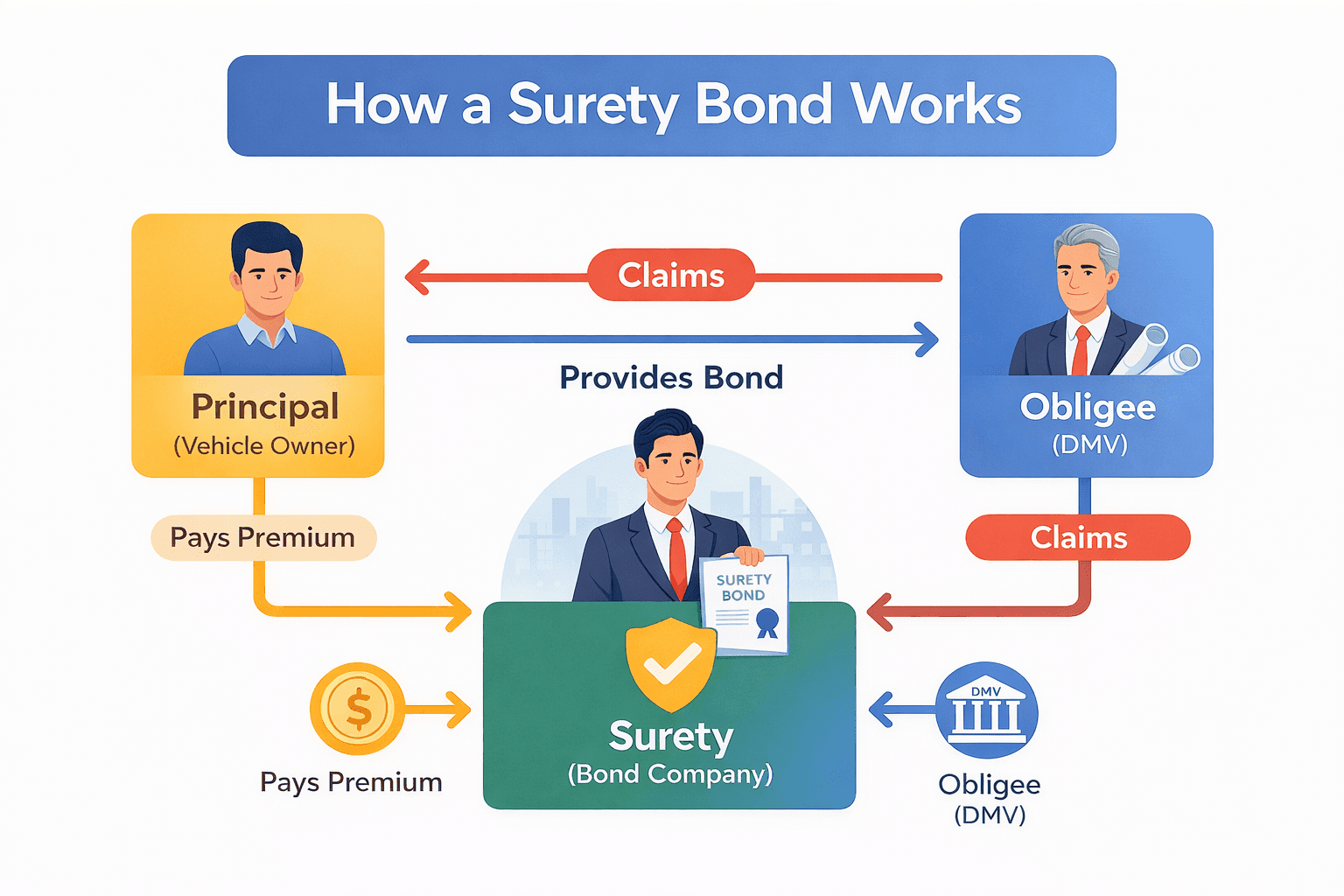
Every surety bond involves three parties. The principal is you — the business or individual required to obtain the bond. The obligee is the party requiring it — a government agency, a project owner, a client, a state licensing board. The surety is the bonding company that issues the bond and guarantees your performance.
When you purchase a surety bond, the surety is not betting against you. They're vouching for you. The bond says: "This business has been evaluated and we're prepared to stand behind their obligations up to this dollar amount." That guarantee is what gives the obligee confidence — and what makes the bond worth requiring in the first place.


How It Differs From Insurance
This is the distinction that most people miss, and it matters. Insurance is designed so you don't have to pay back the insurer if they pay a claim — that's the point of the coverage. A surety bond works differently. If the surety pays out on a claim against your bond, they are coming back to you for reimbursement. You signed an indemnity agreement when you got the bond. That agreement is your personal guarantee that you'll repay the surety for anything they pay on your behalf.
This changes how you should think about a bond claim. It's not a safety net. It's a credit facility — the surety is extending their financial credibility to back yours, and they expect to be made whole if anything goes wrong.
The Two Broad Categories
Contract bonds — also called construction bonds — are required in connection with a specific project or contract. Bid bonds, performance bonds, and payment bonds fall into this category. They guarantee that a contractor will perform work as agreed and pay the people who work on the project.
Commercial bonds — sometimes called license and permit bonds — cover everything else. Mortgage broker bonds, auto dealer bonds, contractor license bonds, notary bonds, freight broker bonds, lottery bonds, and hundreds of other types. These are typically required by a government agency as a condition of operating in a licensed industry, and they protect the public from misconduct or financial harm caused by the licensed business.
Bond Amount vs. Premium: The Number That Trips Everyone Up
When someone says "I need a $50,000 bond," they're stating the bond amount — the maximum amount that can be paid out if a claim is made against the bond. That is not what you pay. What you pay is the premium — a percentage of the bond amount, typically 1–3% for most commercial bonds and 0.5–3% for contract bonds.
A $50,000 bond with a 2% rate costs $1,000 per year. A $500,000 performance bond at 1.5% costs $7,500 — one time, for the duration of the project. The premium is the cost of the surety's guarantee. The bond amount is the ceiling on what the surety will pay if something goes wrong.
Why Your Business Might Need One (or More)
Bond requirements vary enormously by industry, state, and situation. Some common triggers:
You're applying for a contractor's license — most states require a license bond
You're bidding on a public construction project — bid bonds and P&P bonds required
You're getting licensed as a mortgage broker — state-required license bond
You're starting a freight brokerage — FMCSA requires a $75,000 BMC-84 bond
You're operating as a car dealer — auto dealer bond required in every state
You're a Medicare/Medicaid DME supplier — CMS requires a $50,000 surety bond per enrollment
Apply for Your Bond Today
Fast approvals, instant issue, and exceptional rates across all 50 states.